
Euclid space telescope unveils first major data release, including map of 900 million galaxies
Summary
The powerful Euclid space telescope is making the largest-ever 3D map of the cosmos, and ESA has just shared the first enormous piece of it. On July 1, 2023, the European Space Agency (ESA) launched the Euclid space telescope into space. Covered by 3 outlets: 3 are centre.
Automated summary picked from the outlets' own descriptions.
Who is covering this
-
Space telescope Euclid sets the new standard for cosmology - Phys.org
Space telescope Euclid sets the new standard for cosmology Phys.org European survey reveals 900m galaxies – and possibly secrets of ‘dark universe’ The Guardian Euclid lays the foundation for its best-ever 3D map of the Universe ESA Astronomers’ cosmic findings could unlock...
-
Space telescope Euclid sets the new standard for cosmology
On July 1, 2023, the European Space Agency (ESA) launched the Euclid space telescope into space. Its mission: to create the largest and most detailed map of the universe ever made.
-
Dark matter breakthrough coming? Euclid space telescope unveils its 1st look into the dark universe (video) - Space
Dark matter breakthrough coming? Euclid space telescope unveils its 1st look into the dark universe (video) Space Euclid lays the foundation for its best-ever 3D map of the Universe ESA European survey reveals 900m galaxies – and possibly secrets of ‘dark universe’ The...
-
Euclid space telescope unveils first major data release, including map of 900 million galaxies
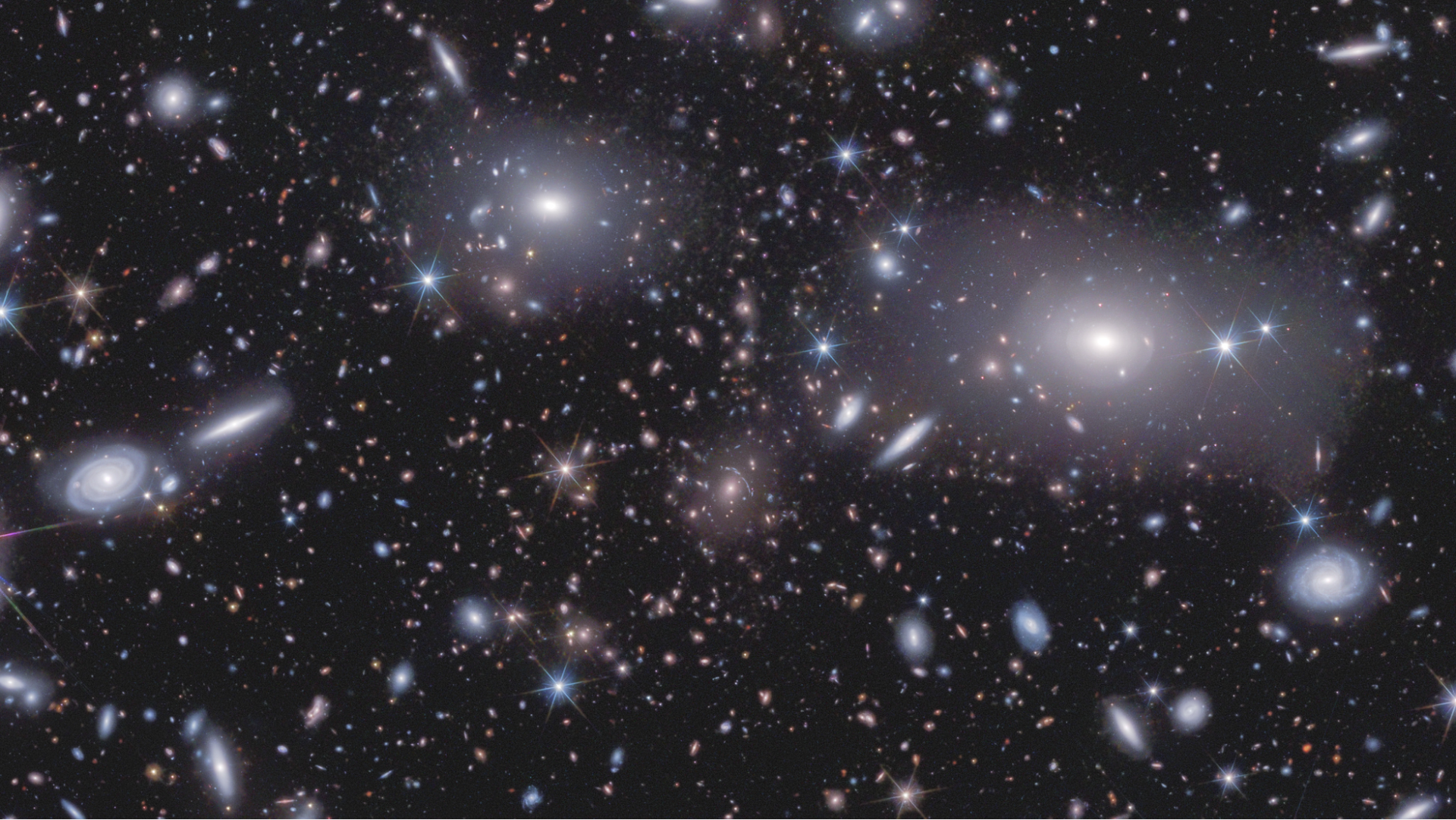
The powerful Euclid space telescope is making the largest-ever 3D map of the cosmos, and ESA has just shared the first enormous piece of it.
-
Euclid offers best-ever 3D map of the universe to date
The Euclid Consortium and the European Space Agency (ESA) have released the first major batch of data from the Euclid space telescope. This release, which captures light from more than a billion objects and covers an area of sky equivalent to 9,500 full moons, lays the...


Related stories

CubeSat achieves challenging laser link to ground

COP31: A look back at how ice is retreating across the globe
Comments
Comments need JavaScript.