INDBInternet News Database 2.5 Updated 2 min ago · 293 sources Show or hide images Light or dark

Results for “Molecular Ecology”

Science
1 source

Who is covering this

PhysCenter
Truth score 38
Centre 100%100%
PhysCenter

Genetic ancestry plays a key role in the migration of Cory's shearwaters

To what extent do genes influence the migratory routes of birds? The factors that determine the long-distance migrations of seabirds are not yet fully understood. Now, a study published in the journal Molecular Ecology reveals that, in...

Lean: Center Fact-focusedFactuality: Mostly factualCountry: United StatesFunding: CorporateOwner: Independent
Full coverage
Coverage breakdown
Funding
Corporate100%
Countries
United States100%
Media ownership
Independent100%
Avg reliability65
Low-credibility share0%
Fact / opinion1/0
State media0%
More analysis
Truth score: 38 (Weakly supported) Propaganda risk: 0 Trending: Low Sources: 1 Reliability: 65 Bias severity: 0 Risk: 0Sentiment: 0Sensationalism: 0 Amplification: 0

How we score

Like
Centre 100%100%
ABC News (Australia)Center

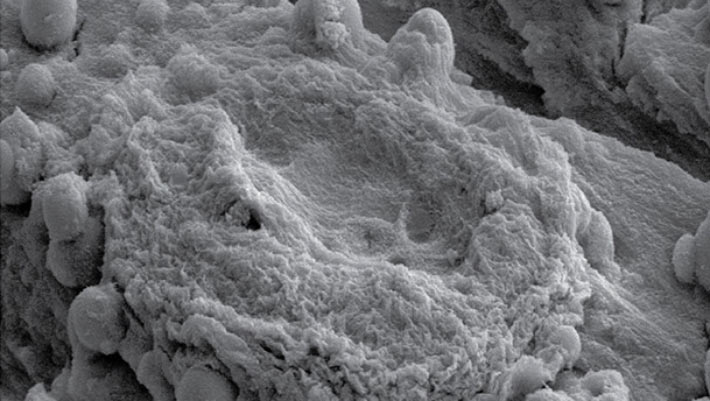
Molecular traces from 'blood cells' found in 115-million-year-old dinosaur bones

The surprise discovery of an iron-carrying molecule preserved in the bones of a Brazilian dinosaur adds to research about soft tissues found in fossils that are millions of years old. Once thought impossible, the molecules were...

Lean: Center Fact-focusedFactuality: Very highCountry: AustraliaFunding: Public broadcasterOwner: Australian Government
+ 5 · Full coverage
Coverage breakdown
Funding
Corporate89%
Public broadcaster11%
Countries
United States75%
Australia12%
United Kingdom12%
Media ownership
Independent50%
Australian Government12%
Google News12%
DMGT12%
Future US12%
Avg reliability72
Low-credibility share0%
Fact / opinion10/0
State media0%
More analysis
Truth score: 70 (Corroborated) Propaganda risk: 0 Trending: Low Sources: 8 Reliability: 72 Bias severity: 0 Risk: 0Sentiment: 0Sensationalism: 1 Amplification: 0

How we score

Like
Health
1 source

Who is covering this

The GuardianLeft
Truth score 45
Left 100%100%
The GuardianLeft

Molecular signal in blood helps detect early risk for ovarian cancer, study finds

Researchers discover a potential diagnostic breakthrough for a disease often ⁠discovered after it has already spread A molecular signal in the blood helps identify microscopic changes that precede development of ovarian cancer,...

Lean: Left Fact-focusedFactuality: Very highCountry: United KingdomFunding: Nonprofit trustOwner: Scott Trust
Full coverage
Coverage breakdown
Funding
Nonprofit trust100%
Countries
United Kingdom100%
Media ownership
Scott Trust100%
Avg reliability85
Low-credibility share0%
Fact / opinion1/0
State media0%
More analysis
Truth score: 45 (Limited corroboration) Propaganda risk: 0 Trending: Low Sources: 1 Reliability: 85 Bias severity: 0 Risk: 0Sentiment: 100Sensationalism: 0 Amplification: 0

How we score

Like
Science
1 source

Who is covering this

PhysCenter
Truth score 38
Centre 100%100%
PhysCenter

Molecular structures reveal how a bacteriophage protein inhibits bacterial cell wall synthesis

Drug-resistant bacteria are becoming more common worldwide, posing a major public health challenge. Addressing this problem requires finding new ways to eliminate bacteria, which in turn requires analyzing essential cellular processes...

Lean: Center Fact-focusedFactuality: Mostly factualCountry: United StatesFunding: CorporateOwner: Independent
Full coverage
Coverage breakdown
Funding
Corporate100%
Countries
United States100%
Media ownership
Independent100%
Avg reliability65
Low-credibility share0%
Fact / opinion1/0
State media0%
More analysis
Truth score: 38 (Weakly supported) Propaganda risk: 0 Trending: Low Sources: 1 Reliability: 65 Bias severity: 0 Risk: 0Sentiment: 0Sensationalism: 0 Amplification: 0

How we score

Like
Health
1 source

Who is covering this

MedscapeCenter
Truth score 38
Centre 100%100%
MedscapeCenter

Molecular Testing Rates Low in Rural Patients With NSCLC

A new study examines molecular testing patterns among older adults with advanced non-small cell lung cancer residing in the rural US.

Lean: Center Fact-focusedFactuality: Mostly factualCountry: United StatesFunding: CorporateOwner: Independent
Full coverage
Coverage breakdown
Funding
Corporate100%
Countries
United States100%
Media ownership
Independent100%
Avg reliability65
Low-credibility share0%
Fact / opinion1/0
State media0%
More analysis
Truth score: 38 (Weakly supported) Propaganda risk: 0 Trending: Low Sources: 1 Reliability: 65 Bias severity: 0 Risk: 0Sentiment: 0Sensationalism: 8 Amplification: 0

How we score

Like
Science
1 source

Who is covering this

PhysCenter
Truth score 38
Centre 100%100%
PhysCenter

Molecular choreography: How the p97 protein regulates cellular quality control

The p97 protein plays a central role in cellular quality control by preparing defective or no-longer-needed proteins for degradation and recycling. Researchers at the University of Münster, in collaboration with the University of...

Lean: Center Fact-focusedFactuality: Mostly factualCountry: United StatesFunding: CorporateOwner: Independent
Full coverage
Coverage breakdown
Funding
Corporate100%
Countries
United States100%
Media ownership
Independent100%
Avg reliability65
Low-credibility share0%
Fact / opinion1/0
State media0%
More analysis
Truth score: 38 (Weakly supported) Propaganda risk: 0 Trending: Low Sources: 1 Reliability: 65 Bias severity: 0 Risk: 0Sentiment: 0Sensationalism: 0 Amplification: 0

How we score

Like
Science
1 source

Who is covering this

PhysCenter
Truth score 38
Centre 100%100%
PhysCenter

Molecular imaging reveals how shape-shifting protein complex captures DNA and holds separate sections together

Researchers at Kanazawa University and the National Institute of Genetics in Japan have used high-speed atomic force microscopy to observe how a group of proteins known as Smc5/6 interacts with DNA. The images reveal how this structure...

Lean: Center Fact-focusedFactuality: Mostly factualCountry: United StatesFunding: CorporateOwner: Independent
Full coverage
Coverage breakdown
Funding
Corporate100%
Countries
United States100%
Media ownership
Independent100%
Avg reliability65
Low-credibility share0%
Fact / opinion1/0
State media0%
More analysis
Truth score: 38 (Weakly supported) Propaganda risk: 0 Trending: Low Sources: 1 Reliability: 65 Bias severity: 0 Risk: 0Sentiment: 0Sensationalism: 0 Amplification: 0

How we score

Like
Science
1 source

Who is covering this

PhysCenter
Truth score 38
Centre 100%100%
PhysCenter

Molecular dinitrogen anions pave the way for low-temperature ammonia synthesis

While ammonia (NH₃) is best known for its role in fertilizer production, it is attracting attention as a carbon-free hydrogen carrier, potentially offering a practical way to store and transport clean fuel. Despite this promise, NH₃...

Lean: Center Fact-focusedFactuality: Mostly factualCountry: United StatesFunding: CorporateOwner: Independent
Full coverage
Coverage breakdown
Funding
Corporate100%
Countries
United States100%
Media ownership
Independent100%
Avg reliability65
Low-credibility share0%
Fact / opinion1/0
State media0%
More analysis
Truth score: 38 (Weakly supported) Propaganda risk: 0 Trending: Low Sources: 1 Reliability: 65 Bias severity: 0 Risk: 0Sentiment: 0Sensationalism: 0 Amplification: 0

How we score

Like
Science
1 source

Who is covering this

PhysCenter
Truth score 38
Centre 100%100%
PhysCenter

'Molecular armor' can trap shape-matched planar molecules

A research team has designed and synthesized a molecular cage with an internal cavity by connecting two curved π-conjugated molecules face-to-face at three points.

Lean: Center Fact-focusedFactuality: Mostly factualCountry: United StatesFunding: CorporateOwner: Independent
Full coverage
Coverage breakdown
Funding
Corporate100%
Countries
United States100%
Media ownership
Independent100%
Avg reliability65
Low-credibility share0%
Fact / opinion1/0
State media0%
More analysis
Truth score: 38 (Weakly supported) Propaganda risk: 0 Trending: Low Sources: 1 Reliability: 65 Bias severity: 0 Risk: 0Sentiment: 0Sensationalism: 0 Amplification: 0

How we score

Like
Business
1 source

Who is covering this

NewsCenter
Truth score 38
Centre 100%100%
NewsCenter

Molecular chirality wins this year’s Nobel Prize in Chemistry

Molecular chirality wins this year’s Nobel Prize in Chemistry The Johns Hopkins News-Letter Nobel-winning chemistry unlocks the secret of mirror-image molecules Daily Pioneer Asymmetric synthesis drives chiral drug discovery BioWorld News

Lean: Center Fact-focusedFactuality: Mostly factualCountry: IndiaFunding: CorporateOwner: Independent
Full coverage
Coverage breakdown
Funding
Corporate100%
Countries
India100%
Media ownership
Independent100%
Avg reliability65
Low-credibility share0%
Fact / opinion1/0
State media0%
More analysis
Truth score: 38 (Weakly supported) Propaganda risk: 0 Trending: Low Sources: 1 Reliability: 65 Bias severity: 0 Risk: 0Sentiment: 100Sensationalism: 0 Amplification: 0

How we score

Like
Science
1 source

Who is covering this

PhysCenter
Truth score 38
Centre 100%100%
PhysCenter

Controlling molecular helicity: A new approach to constructing chiral nanographenes

Nanographenes with up to eight helicene units can now be selectively synthesized using a two-step process. Researchers from Science Tokyo have developed a strategy to synthesize multi-helical nanographenes containing up to eight...

Lean: Center Fact-focusedFactuality: Mostly factualCountry: United StatesFunding: CorporateOwner: Independent
Full coverage
Coverage breakdown
Funding
Corporate100%
Countries
United States100%
Media ownership
Independent100%
Avg reliability65
Low-credibility share0%
Fact / opinion1/0
State media0%
More analysis
Truth score: 38 (Weakly supported) Propaganda risk: 0 Trending: Low Sources: 1 Reliability: 65 Bias severity: 0 Risk: 0Sentiment: 0Sensationalism: 0 Amplification: 0

How we score

Like
Science
1 source

Who is covering this

PhysCenter
Truth score 38
Centre 100%100%
PhysCenter

Small molecular twists may strengthen nature's magnetic compass

A collaborative research team led by Yasuhiro Kobori at Kobe University, together with researchers from Toho University, Saitama University, Nagoya Institute of Technology and the University of Freiburg, has identified a potential...

Lean: Center Fact-focusedFactuality: Mostly factualCountry: United StatesFunding: CorporateOwner: Independent
Full coverage
Coverage breakdown
Funding
Corporate100%
Countries
United States100%
Media ownership
Independent100%
Avg reliability65
Low-credibility share0%
Fact / opinion1/0
State media0%
More analysis
Truth score: 38 (Weakly supported) Propaganda risk: 0 Trending: Low Sources: 1 Reliability: 65 Bias severity: 0 Risk: 0Sentiment: 0Sensationalism: 0 Amplification: 0

How we score

Like
Science
1 source

Who is covering this

PhysCenter
Truth score 38
Centre 100%100%
PhysCenter

AI-generated molecular fingerprints help identify existing compounds with therapeutic potential

Health care researchers have long sought to harness the power of computing to design molecules that bind to specific receptors and can be used as targeted treatments for diseases. Even with the increasing sophistication of artificial...

Lean: Center Fact-focusedFactuality: Mostly factualCountry: United StatesFunding: CorporateOwner: Independent
Full coverage
Coverage breakdown
Funding
Corporate100%
Countries
United States100%
Media ownership
Independent100%
Avg reliability65
Low-credibility share0%
Fact / opinion1/0
State media0%
More analysis
Truth score: 38 (Weakly supported) Propaganda risk: 0 Trending: Low Sources: 1 Reliability: 65 Bias severity: 0 Risk: 0Sentiment: 0Sensationalism: 0 Amplification: 0
How we score

Like
Science
1 source

Who is covering this

PhysCenter
Truth score 38
Centre 100%100%
PhysCenter

How bacteria build the molecular bushing of the flagellar motor

The bacterial flagellum is a motility organelle that enables bacteria to swim and is composed of more than 30 different proteins. Researchers have long sought to understand how this complex nanomachine self-assembles from many parts in...

Lean: Center Fact-focusedFactuality: Mostly factualCountry: United StatesFunding: CorporateOwner: Independent
Full coverage
Coverage breakdown
Funding
Corporate100%
Countries
United States100%
Media ownership
Independent100%
Avg reliability65
Low-credibility share0%
Fact / opinion1/0
State media0%
More analysis
Truth score: 38 (Weakly supported) Propaganda risk: 0 Trending: Low Sources: 1 Reliability: 65 Bias severity: 0 Risk: 0Sentiment: 0Sensationalism: 0 Amplification: 0

How we score

Like
Science
1 source

Who is covering this

PhysCenter
Truth score 38
Centre 100%100%
PhysCenter

Blocking specific molecular signal on immune cells may restore ability to fight mutated cells

A previously unrecognized weakness in the immune defenses against certain blood neoplasms could offer a promising target for future treatments. Researchers have discovered that natural killer cells, which normally help the body...

Lean: Center Fact-focusedFactuality: Mostly factualCountry: United StatesFunding: CorporateOwner: Independent
Full coverage
Coverage breakdown
Funding
Corporate100%
Countries
United States100%
Media ownership
Independent100%
Avg reliability65
Low-credibility share0%
Fact / opinion1/0
State media0%
More analysis
Truth score: 38 (Weakly supported) Propaganda risk: 0 Trending: Low Sources: 1 Reliability: 65 Bias severity: 0 Risk: 0Sentiment: 0Sensationalism: 0 Amplification: 0

How we score

Like
Science
1 source

Who is covering this

PhysCenter
Truth score 38
Centre 100%100%
PhysCenter

CheMeleon model adapts to predict molecular properties from scant data

Discovering new molecules for specific uses is a major driver of progress in a wide variety of industries, whether it's pharmaceutical companies looking for new drugs or electronics or energy companies seeking new materials with...

Lean: Center Fact-focusedFactuality: Mostly factualCountry: United StatesFunding: CorporateOwner: Independent
Full coverage
Coverage breakdown
Funding
Corporate100%
Countries
United States100%
Media ownership
Independent100%
Avg reliability65
Low-credibility share0%
Fact / opinion1/0
State media0%
More analysis
Truth score: 38 (Weakly supported) Propaganda risk: 0 Trending: Low Sources: 1 Reliability: 65 Bias severity: 0 Risk: 0Sentiment: 0Sensationalism: 0 Amplification: 0

How we score

Like
Science
1 source

Who is covering this

PhysCenter
Truth score 38
Centre 100%100%
PhysCenter

Experimental study on moths supports the molecular cookie cutter idea proposed for butterflies

Have you ever thought about reinventing yourself? According to a new study on moths conducted by Andrei Sourakov, collection coordinator of Lepidoptera at the Florida Museum of Natural History and affiliate associate professor of...

Lean: Center Fact-focusedFactuality: Mostly factualCountry: United StatesFunding: CorporateOwner: Independent
Full coverage
Coverage breakdown
Funding
Corporate100%
Countries
United States100%
Media ownership
Independent100%
Avg reliability65
Low-credibility share0%
Fact / opinion1/0
State media0%
More analysis
Truth score: 38 (Weakly supported) Propaganda risk: 0 Trending: Low Sources: 1 Reliability: 65 Bias severity: 0 Risk: 0Sentiment: 0Sensationalism: 0 Amplification: 0

How we score

Like
Science
1 source

Who is covering this

PhysCenter
Truth score 38
Centre 100%100%
PhysCenter

Light reflecting within thin films can masquerade as molecular signals in perovskite solar materials

An infrared signal thought to reveal how molecules in perovskite solar materials respond to light-generated charges can arise largely from the way light travels through the thin film itself, a new theoretical study shows. Jun Nishida,...

Lean: Center Fact-focusedFactuality: Mostly factualCountry: United StatesFunding: CorporateOwner: Independent
Full coverage
Coverage breakdown
Funding
Corporate100%
Countries
United States100%
Media ownership
Independent100%
Avg reliability65
Low-credibility share0%
Fact / opinion1/0
State media0%
More analysis
Truth score: 38 (Weakly supported) Propaganda risk: 0 Trending: Low Sources: 1 Reliability: 65 Bias severity: 0 Risk: 0Sentiment: 0Sensationalism: 0 Amplification: 0

How we score

Like
Science
1 source

Who is covering this

PhysCenter
Truth score 38
Centre 100%100%
PhysCenter

New microscopy method reveals tiny cell structures and their molecular surroundings

How do cells respond to drugs? A new microscopy technique could provide more precise answers to this question in the future. Researchers from Bielefeld University and the University of Vienna have developed a method as part of the...

Lean: Center Fact-focusedFactuality: Mostly factualCountry: United StatesFunding: CorporateOwner: Independent
Full coverage
Coverage breakdown
Funding
Corporate100%
Countries
United States100%
Media ownership
Independent100%
Avg reliability65
Low-credibility share0%
Fact / opinion1/0
State media0%
More analysis
Truth score: 38 (Weakly supported) Propaganda risk: 0 Trending: Low Sources: 1 Reliability: 65 Bias severity: 0 Risk: 0Sentiment: 0Sensationalism: 0 Amplification: 0

How we score

Like
Science
1 source

Who is covering this

PhysCenter
Truth score 38
Centre 100%100%
PhysCenter

2,700-year-old mummy head yields first molecular evidence linking aloe to Egyptian embalming

What materials did ancient Egyptians use to preserve the dead, and how can their composition still be investigated thousands of years later? An interdisciplinary team at Marburg University has combined modern natural product analysis...

Lean: Center Fact-focusedFactuality: Mostly factualCountry: United StatesFunding: CorporateOwner: Independent
Full coverage
Coverage breakdown
Funding
Corporate100%
Countries
United States100%
Media ownership
Independent100%
Avg reliability65
Low-credibility share0%
Fact / opinion1/0
State media0%
More analysis
Truth score: 38 (Weakly supported) Propaganda risk: 0 Trending: Low Sources: 1 Reliability: 65 Bias severity: 0 Risk: 0Sentiment: -100Sensationalism: 0 Amplification: 0

How we score

Like
Science
1 source

Who is covering this

PhysCenter
Truth score 38
Centre 100%100%
PhysCenter

New synthesis strategy controls handedness in large, light-emitting molecular spirals

Helicenes are a class of organic molecules consisting of benzene rings arranged in a spiral-like shape. These molecules exhibit significant circularly polarized luminescence—emission of light with left or right handedness—and are...

Lean: Center Fact-focusedFactuality: Mostly factualCountry: United StatesFunding: CorporateOwner: Independent
Full coverage
Coverage breakdown
Funding
Corporate100%
Countries
United States100%
Media ownership
Independent100%
Avg reliability65
Low-credibility share0%
Fact / opinion1/0
State media0%
More analysis
Truth score: 38 (Weakly supported) Propaganda risk: 0 Trending: Low Sources: 1 Reliability: 65 Bias severity: 0 Risk: 0Sentiment: 0Sensationalism: 0 Amplification: 0

How we score

Like
Science
1 source

Who is covering this

PhysCenter
Truth score 38
Centre 100%100%
PhysCenter

Light-pulse pairs reveal the femtosecond decay of an inner-shell hole in xenon atoms

Researchers at the UVSOR Synchrotron Facility (Institute for Molecular Science, Japan) and partner institutions have observed the decay of a xenon 4d core hole, an inner-shell vacancy, directly in the time domain. They used pairs of...

Lean: Center Fact-focusedFactuality: Mostly factualCountry: United StatesFunding: CorporateOwner: Independent
Full coverage
Coverage breakdown
Funding
Corporate100%
Countries
United States100%
Media ownership
Independent100%
Avg reliability65
Low-credibility share0%
Fact / opinion1/0
State media0%
More analysis
Truth score: 38 (Weakly supported) Propaganda risk: 0 Trending: Low Sources: 1 Reliability: 65 Bias severity: 0 Risk: 0Sentiment: 0Sensationalism: 0 Amplification: 0

How we score

Like
Science
1 source

Who is covering this

PhysCenter
Truth score 38
Centre 100%100%
PhysCenter

New X-ray method isolates faint signals from water at material surfaces

A research team from Toyohashi University of Technology, the Institute for Molecular Science and the Institute of Science Tokyo, led by Yu Kinjo and professor Ryugo Tero of Toyohashi University of Technology, has developed a new method...

Lean: Center Fact-focusedFactuality: Mostly factualCountry: United StatesFunding: CorporateOwner: Independent
Full coverage
Coverage breakdown
Funding
Corporate100%
Countries
United States100%
Media ownership
Independent100%
Avg reliability65
Low-credibility share0%
Fact / opinion1/0
State media0%
More analysis
Truth score: 38 (Weakly supported) Propaganda risk: 0 Trending: Low Sources: 1 Reliability: 65 Bias severity: 0 Risk: 0Sentiment: 0Sensationalism: 0 Amplification: 0

How we score

Like
Science
1 source

Who is covering this

PhysCenter
Truth score 38
Centre 100%100%
PhysCenter

Boat burial reveals leprosy strain in fifth-century Germany

Visigothic and Vandal forces marched into Italy and conquered Rome; the Huns spread fear and terror on their campaigns through Western Europe; the Franks expanded their domain southward—the fifth century was an era of profound, often...

Lean: Center Fact-focusedFactuality: Mostly factualCountry: United StatesFunding: CorporateOwner: Independent
Full coverage
Coverage breakdown
Funding
Corporate100%
Countries
United States100%
Media ownership
Independent100%
Avg reliability65
Low-credibility share0%
Fact / opinion1/0
State media0%
More analysis
Truth score: 38 (Weakly supported) Propaganda risk: 0 Trending: Low Sources: 1 Reliability: 65 Bias severity: 0 Risk: 0Sentiment: -100Sensationalism: 0 Amplification: 0

How we score

Like
Science
1 source

Who is covering this

PhysCenter
Truth score 38
Centre 100%100%
PhysCenter

Water molecules turn out to be secret messengers for magnetism

Water is not usually thought of as a magnetic material. But a new study led by researchers at Tohoku University's Institute of Multidisciplinary Research for Advanced Materials, in collaboration with National Taipei University of...

Lean: Center Fact-focusedFactuality: Mostly factualCountry: United StatesFunding: CorporateOwner: Independent
Full coverage
Coverage breakdown
Funding
Corporate100%
Countries
United States100%
Media ownership
Independent100%
Avg reliability65
Low-credibility share0%
Fact / opinion1/0
State media0%
More analysis
Truth score: 38 (Weakly supported) Propaganda risk: 0 Trending: Low Sources: 1 Reliability: 65 Bias severity: 0 Risk: 0Sentiment: 0Sensationalism: 0 Amplification: 0

How we score

Like
Science
1 source

Who is covering this

PhysCenter
Truth score 38
Centre 100%100%
PhysCenter

Single molecules could provide the building blocks for future quantum networks

Quantum computers rely on qubits as their units of information. To connect them into a larger network across long distances, they need to transmit quantum information using light.

Lean: Center Fact-focusedFactuality: Mostly factualCountry: United StatesFunding: CorporateOwner: Independent
Full coverage
Coverage breakdown
Funding
Corporate100%
Countries
United States100%
Media ownership
Independent100%
Avg reliability65
Low-credibility share0%
Fact / opinion1/0
State media0%
More analysis
Truth score: 38 (Weakly supported) Propaganda risk: 0 Trending: Low Sources: 1 Reliability: 65 Bias severity: 0 Risk: 0Sentiment: 0Sensationalism: 0 Amplification: 0

How we score

Like
Science
1 source

Who is covering this

PhysCenter
Truth score 38
Centre 100%100%
PhysCenter

Supercharged 'molecule highway' membrane that speeds water transport could transform industrial processing

New membrane technology delivering faster and more precise molecule separation could improve the efficiency and sustainability of energy-intensive industrial processes—from purifying chemicals and recovering valuable resources to...

Lean: Center Fact-focusedFactuality: Mostly factualCountry: United StatesFunding: CorporateOwner: Independent
Full coverage
Coverage breakdown
Funding
Corporate100%
Countries
United States100%
Media ownership
Independent100%
Avg reliability65
Low-credibility share0%
Fact / opinion1/0
State media0%
More analysis
Truth score: 38 (Weakly supported) Propaganda risk: 0 Trending: Low Sources: 1 Reliability: 65 Bias severity: 0 Risk: 0Sentiment: 100Sensationalism: 0 Amplification: 0

How we score

Like
Science
1 source

Who is covering this

PhysCenter
Truth score 38
Centre 100%100%
PhysCenter

One molecule, many atoms: Platinum bonds respond to surface features up to 10 nanometers away

Many chemical processes that sustain modern society depend on molecules binding to metal surfaces. The production of synthetic fertilizer, for example, relies on heterogeneous catalysis, in which gases react on the surface of a solid...

Lean: Center Fact-focusedFactuality: Mostly factualCountry: United StatesFunding: CorporateOwner: Independent
Full coverage
Coverage breakdown
Funding
Corporate100%
Countries
United States100%
Media ownership
Independent100%
Avg reliability65
Low-credibility share0%
Fact / opinion1/0
State media0%
More analysis
Truth score: 38 (Weakly supported) Propaganda risk: 0 Trending: Low Sources: 1 Reliability: 65 Bias severity: 0 Risk: 0Sentiment: 0Sensationalism: 0 Amplification: 0

How we score

Like
Science
1 source

Who is covering this

PhysCenter
Truth score 38
Centre 100%100%
PhysCenter

By carefully arranging molecules, scientists can control how a material responds to light, heat and physical force

University of Missouri researchers have created a single solid material that responds differently depending on what it's exposed to. Shine light on it, and it changes from yellow to white, an indication of a chemical reaction. Heat it,...

Lean: Center Fact-focusedFactuality: Mostly factualCountry: United StatesFunding: CorporateOwner: Independent
Full coverage
Coverage breakdown
Funding
Corporate100%
Countries
United States100%
Media ownership
Independent100%
Avg reliability65
Low-credibility share0%
Fact / opinion1/0
State media0%
More analysis
Truth score: 38 (Weakly supported) Propaganda risk: 0 Trending: Low Sources: 1 Reliability: 65 Bias severity: 0 Risk: 0Sentiment: 0Sensationalism: 0 Amplification: 0

How we score

Like
Science
1 source

Who is covering this

PhysCenter
Truth score 38
Centre 100%100%
PhysCenter

Protein-building RNA molecules reveal possible remnants of an ancestral genetic code

The genetic code determines the correspondence between genetic instructions and amino acids—the building blocks that form proteins. How this correspondence arose is one of the major open questions in evolutionary biology. A study led by...

Lean: Center Fact-focusedFactuality: Mostly factualCountry: United StatesFunding: CorporateOwner: Independent
Full coverage
Coverage breakdown
Funding
Corporate100%
Countries
United States100%
Media ownership
Independent100%
Avg reliability65
Low-credibility share0%
Fact / opinion1/0
State media0%
More analysis
Truth score: 38 (Weakly supported) Propaganda risk: 0 Trending: Low Sources: 1 Reliability: 65 Bias severity: 0 Risk: 0Sentiment: 0Sensationalism: 0 Amplification: 0

How we score

Like