INDBInternet News Database 2.5 Updated just now · 414 sources Show or hide images Light or dark

Results for “Cell Cultures”

Science
1 source

Who is covering this

PhysCenter
Truth score 38
Centre 100%100%
PhysCenter

Newly characterized Streptomyces strain yields previously unknown natural products

In a collaboration, researchers from the Leibniz Institute DSMZ-German Collection of Microorganisms and Cell Cultures and the Helmholtz Center for Infection Research (HZI) have discovered two previously unknown natural products....

Lean: Center Fact-focusedFactuality: Mostly factualCountry: United StatesFunding: CorporateOwner: Independent
Full coverage
Coverage breakdown
Funding
Corporate100%
Countries
United States100%
Media ownership
Independent100%
Avg reliability65
Low-credibility share0%
Fact / opinion1/0
State media0%
More analysis
Truth score: 38 (Weakly supported) Propaganda risk: 0 Trending: Low Sources: 1 Reliability: 65 Bias severity: 0 Risk: 0Sentiment: 0Sensationalism: 0 Amplification: 0

How we score

Science
1 source

Who is covering this

PhysCenter
Truth score 38
Centre 100%100%
PhysCenter

The human surfaceome: AI flags potential cell surface drug targets overlooked by major databases

More than 65% of approved medicines work by binding to proteins on the surface of human cells. Yet scientists developing new treatments face a fundamental problem: Major biological databases disagree about which proteins are actually...

Lean: Center Fact-focusedFactuality: Mostly factualCountry: United StatesFunding: CorporateOwner: Independent
Full coverage
Coverage breakdown
Funding
Corporate100%
Countries
United States100%
Media ownership
Independent100%
Avg reliability65
Low-credibility share0%
Fact / opinion1/0
State media0%
More analysis
Truth score: 38 (Weakly supported) Propaganda risk: 0 Trending: Low Sources: 1 Reliability: 65 Bias severity: 0 Risk: 0Sentiment: 100Sensationalism: 0 Amplification: 0

How we score

Science
1 source

Who is covering this

PhysCenter
Truth score 38
Centre 100%100%
PhysCenter

Nanoparticle properties shape protein coats that guide cell entry and immune evasion

A new study has revealed molecular rules governing how nanoparticles interact with biological systems, showing how their physicochemical properties shape protein corona (PC) formation and influence biological outcomes. The findings...

Lean: Center Fact-focusedFactuality: Mostly factualCountry: United StatesFunding: CorporateOwner: Independent
Full coverage
Coverage breakdown
Funding
Corporate100%
Countries
United States100%
Media ownership
Independent100%
Avg reliability65
Low-credibility share0%
Fact / opinion1/0
State media0%
More analysis
Truth score: 38 (Weakly supported) Propaganda risk: 0 Trending: Low Sources: 1 Reliability: 65 Bias severity: 0 Risk: 0Sentiment: 0Sensationalism: 0 Amplification: 0

How we score

Science
1 source

Who is covering this

PhysCenter
Truth score 38
Centre 100%100%
PhysCenter

Light reshapes gelatin scaffolds to steer cell growth in three dimensions

Soft, flexible hydrogels have enabled significant advancements in engineering biological tissue by mimicking the natural scaffolding that provides structure and support to cells. Existing engineered hydrogels, however, fall short in a...

Lean: Center Fact-focusedFactuality: Mostly factualCountry: United StatesFunding: CorporateOwner: Independent
Full coverage
Coverage breakdown
Funding
Corporate100%
Countries
United States100%
Media ownership
Independent100%
Avg reliability65
Low-credibility share0%
Fact / opinion1/0
State media0%
More analysis
Truth score: 38 (Weakly supported) Propaganda risk: 0 Trending: Low Sources: 1 Reliability: 65 Bias severity: 0 Risk: 0Sentiment: 100Sensationalism: 0 Amplification: 0

How we score

Science
1 source

Who is covering this

PhysCenter
Truth score 38
Centre 100%100%
PhysCenter

Researchers create first whole-body single-cell atlas of an adult vertebrate

Viewed from above, Danionella cerebrum offers a rare sight in a vertebrate: its brain, visible through the top of its head. Since the species was adopted for neuroscience research in 2018 and formally described in 2021, the tiny,...

Lean: Center Fact-focusedFactuality: Mostly factualCountry: United StatesFunding: CorporateOwner: Independent
Full coverage
Coverage breakdown
Funding
Corporate100%
Countries
United States100%
Media ownership
Independent100%
Avg reliability65
Low-credibility share0%
Fact / opinion1/0
State media0%
More analysis
Truth score: 38 (Weakly supported) Propaganda risk: 0 Trending: Low Sources: 1 Reliability: 65 Bias severity: 0 Risk: 0Sentiment: 0Sensationalism: 0 Amplification: 0

How we score

Technology
1 source

Who is covering this

HuffPostLeft
Truth score 38
Left 100%100%
HuffPostLeft

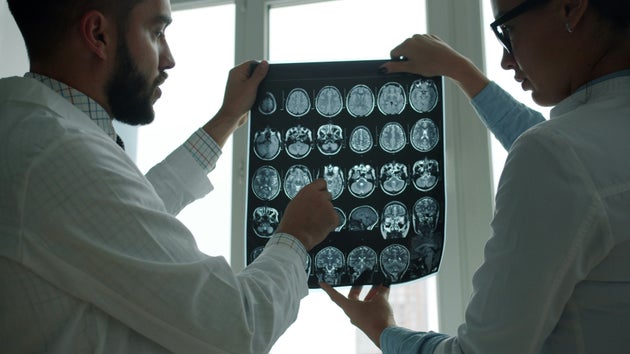
'Alzheimer's-Resilient' Brains Seem To Have A Cell 'Fertiliser' In Common

Dementias, like Alzheimer’s, are generally progressive diseases, which means they get worse over time. Their progression is usually grouped into early, middle, and advanced stages. But a percentage of people who have the physical brain...

Lean: Left Fact-focusedFactuality: Mostly factualCountry: United StatesFunding: CorporateOwner: BuzzFeed Inc.
Full coverage
Coverage breakdown
Funding
Corporate100%
Countries
United States100%
Media ownership
BuzzFeed Inc.100%
Avg reliability65
Low-credibility share0%
Fact / opinion1/0
State media0%
More analysis
Truth score: 38 (Weakly supported) Propaganda risk: 0 Trending: Low Sources: 1 Reliability: 65 Bias severity: 0 Risk: 0Sentiment: 0Sensationalism: 0 Amplification: 0

How we score