Black holes can split apart 'like pants' if they spin too fast, study hints
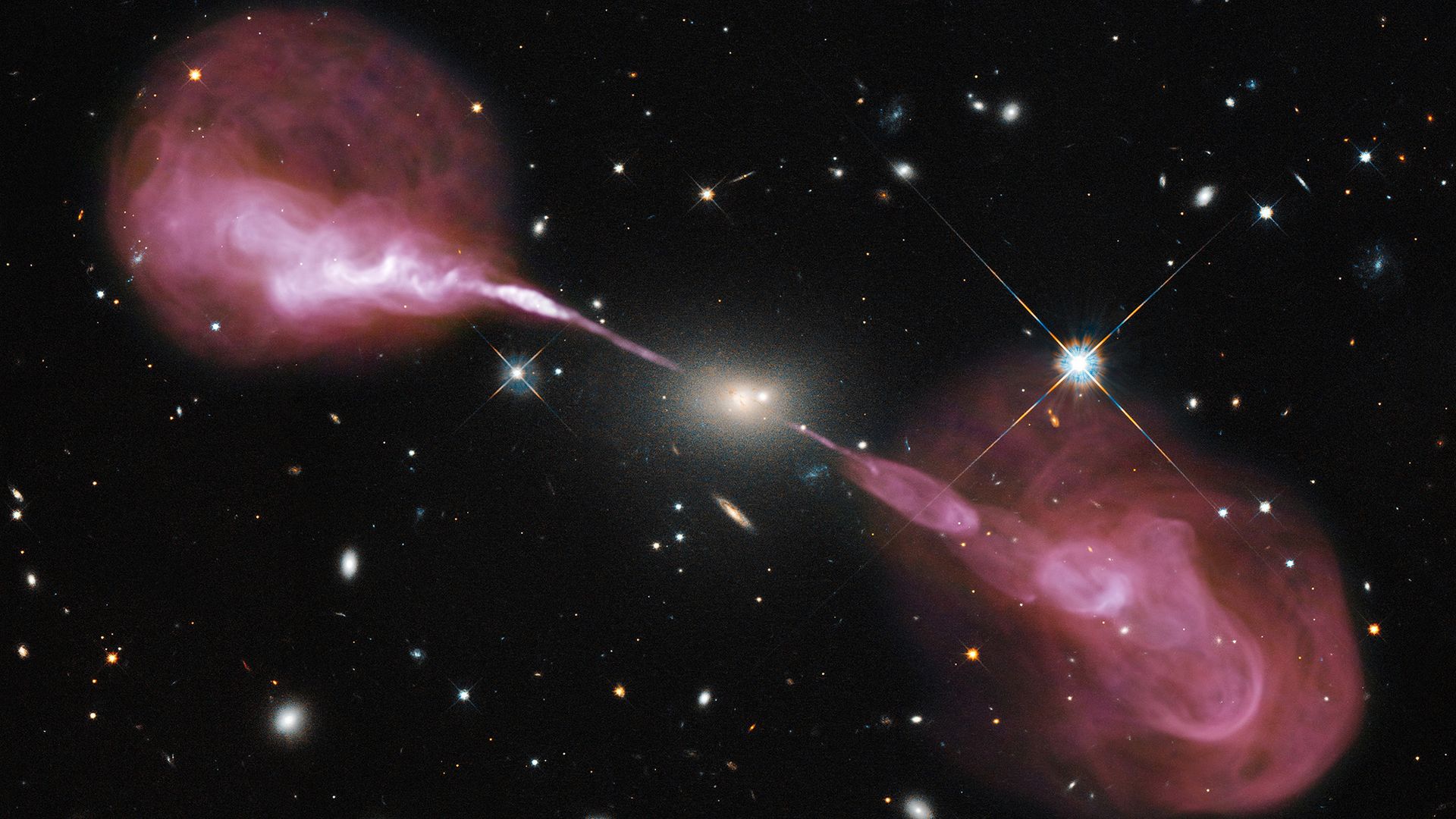
Astrophysicists have dared to ask a cosmological question never asked before: Do black holes "wear pants"? New research shows how fast-spinning black holes may split apart.
Picture a black hole, and you probably see a hole in space that you could fall into. Astrophysicist Dr. Becky Smethurst says that’s not quite right because black holes actually aren’t holes at all. They’re massive amounts of matter...
Chinese scientists have developed a first-of-its-kind purifier capable of removing breakaway tumour cells that circulate through the bloodstream, potentially preventing the recurrence and spread of some cancers. The Shanghai Jiao Tong...
When the universe was less than 700 million years old, the supermassive black hole powering a quasar called J0313-1806 had already grown to about 3 billion times the mass of the sun. It is one of the most extreme examples of a puzzle...
The early universe may have produced minuscule black holes, and if they are still around today they could devour stars from the inside or blow them up entirely
How the first massive black holes formed in the universe remains an open question in astronomy. Black holes weighing about a billion solar masses within the first billion years of the universe require extraordinary origin stories.
Something strange is happening way, way past Pluto. Astronomers kept finding small, icy objects out there, some of which were oddly clumped together, as if something heavy had herded them into place. That “something” became known as...
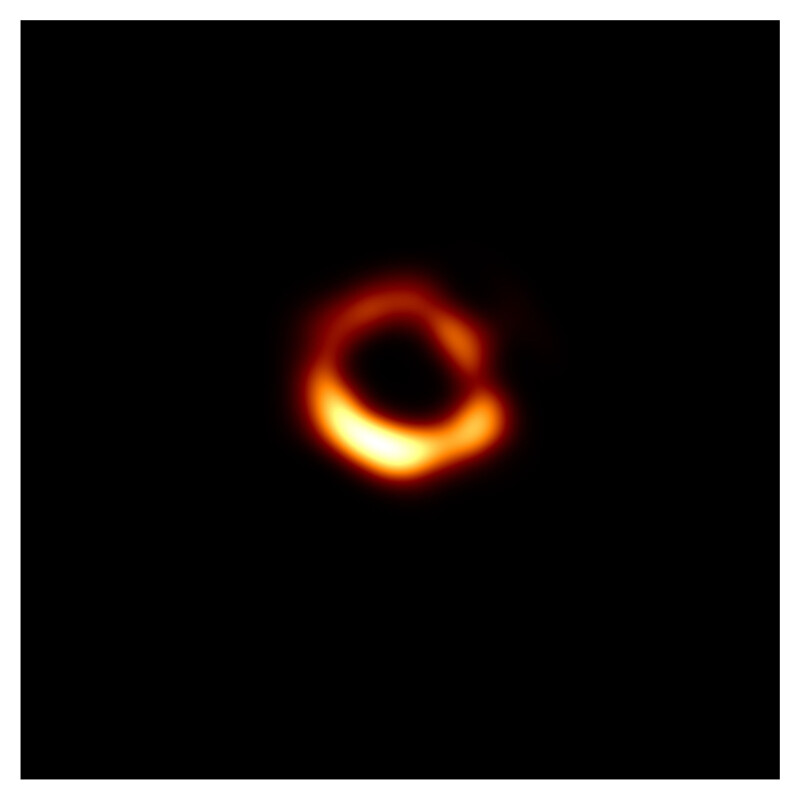
On April 10, 2019, the Event Horizon Telescope (EHT) Collaboration revealed the first picture of a black hole. The object is at the center of a galaxy known as M87, about 55 million light-years away.
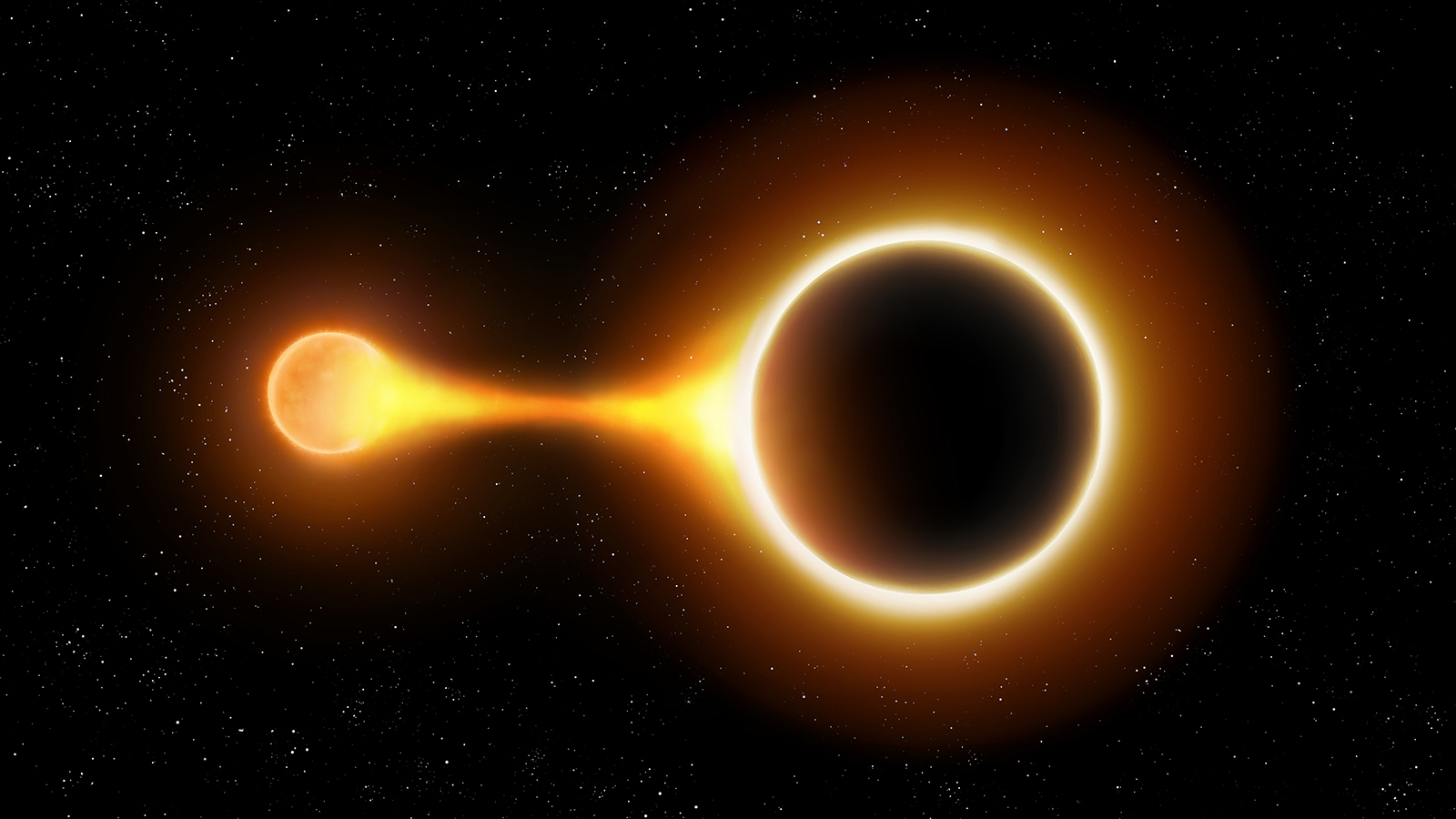
Sometimes massive stars can mimic the behavior of a black hole and trick astronomers into misinterpreting their nature. Such is the case with a strange pair of stars in the Large Magellanic Cloud (LMC) cluster NGC 1850. The system was...
The doughnut shape of the Event Horizon Telescope’s first image of a black hole has come under fire, but an independent check showed that it – and general relativity – still stands
The enrichment in metals (any element heavier than hydrogen and helium, including carbon, oxygen, iron and gold) likely came from generations of exploding stars, according to new observations from the NASA/ESA/CSA James Webb Space Telescope.
Scientists have hypothesized that, in the fraction of a second following the Big Bang, minute black holes may have been forged within tiny, dense pockets that collapsed under their own gravity. If these primordial black holes are ever...
If Tiny primordial Black Holes Exist, Here's How We Might Find Them Mirage News
Astronomers once assumed galaxies were born before black holes, but giant black holes spotted in the early universe are forcing them to rethink their order of events.
Not all black holes are born in supernova explosions. Some stars simply implode ThePrint Astronomers discover rare black holes that formed when stars failed to go supernova Space Black Holes 10 Times the Sun's Mass May Come From Stars...
Black hole discovery wasn't one person's achievement. Follow the ideas and observations that turned invisible stars into measurable cosmic objects.
When the most massive stars in the universe die, they often detonate in fiery supernovae, dramatically blasting most of their matter into space. The remaining stellar cores collapse into neutron stars and, sometimes, black holes....
Primordial black holes are hypothetical objects that could have formed directly from dense clumps of matter in the very early universe. If they exist, their dramatic origins would set them apart from the black holes we see today, which...
Astronomers using the Atacama Large Millimeter/submillimeter Array (ALMA) measured the mass of a supermassive black hole in WISE J224607.56−052634.9, also known as W2246-0526. Its light has been stretched by the expansion of the...
Astronomers using the Atacama Large Millimeter/submillimeter Array (ALMA) have observed a powerful magnetic storm on the red giant Mira A create an enormous loop of gas that extends as far out as Saturn’s orbit.
A team of astronomers led by Julien Wolf, a postdoctoral researcher at the Max Planck Institute for Astronomy (MPIA) in Heidelberg, Germany (now at the European Southern Observatory in Garching bei München, Germany), discovered the most...
Some active galactic nuclei (AGNs)—galaxies that are powered by actively feeding black holes—undergo rapid changes in their appearance, which manifest as a change in their spectral properties. These are called "changing-look" AGNs....
A recent reanalysis of the outsize black hole galaxy UHZ1 using existing X-ray data and new infrared observations challenges a previous groundbreaking claim. Three years ago, this galaxy made news for hosting an unusually massive and...
Who is covering this
The council's finances are under major pressure.
The oldest pair of compact quasars ever observed has been found only 900 million years after the Big Bang. Scientists say there is no theoretical explanation for how the pair of actively feeding black holes grew so massive at such an...
Council leaders admit they are entering ‘challenging territory’ as they search for tens of millions in further savings
Scientists have discovered the earliest-known quasar lurking in the ancient universe — and it's growing at a slower rate than scientists believed possible.
University of Hawaiʻi at Mānoa researchers are exploring a new way to study some of the universe's most mysterious objects: supermassive black holes.
Who is covering this
Scottish Labour has demanded an SNP budget plan to tackle a projected £5bn spending gap by 2030, protect public services and provide £350 energy bill support.
Around 12 million light-years away, the supermassive black hole of the galaxy Centaurus A is hurling two enormous plasma jets into space at nearly the speed of light. These so-called jets are brighter at their edges than at their...
And find they were right all along
Black hole jet ejections are powerful outbursts of high-energy photons and particles that provide insights into extreme astrophysical processes. However, predicting when they will occur remains difficult. In a study, researchers from...