INDBInternet News Database 2.5 Updated just now · 292 sources Show or hide images Light or dark

Results for “Asteroid City”

Entertainment
1 source

Who is covering this

DeadlineCenter
Truth score 41
Centre 100%100%
DeadlineCenter

Ron Livingston Wraps On Steve Collins Comedy ‘Fonk’

EXCLUSIVE: Ron Livingston (Office Space), Jake Ryan (Wes Anderson’s Asteroid City), Beth Grant (Donnie Darko) and Christina Kirk (Girls) have wrapped on the Ohio shoot for Fonk, an indie comedy from filmmaker Steve Collins. Fonk follows...

Lean: Center Fact-focusedFactuality: HighCountry: United StatesFunding: CorporateOwner: Penske Media Corporation
Full coverage
Coverage breakdown
Funding
Corporate100%
Countries
United States100%
Media ownership
Penske Media Corporation100%
Avg reliability75
Low-credibility share0%
Fact / opinion1/0
State media0%
More analysis
Truth score: 41 (Limited corroboration) Propaganda risk: 0 Trending: Low Sources: 1 Reliability: 75 Bias severity: 0 Risk: 0Sentiment: 0Sensationalism: 0 Amplification: 0

How we score

Like
Science
1 source

Who is covering this

PhysCenter
Truth score 38
Centre 100%100%
PhysCenter

Asteroid mining will crash the platinum market, but that's good news for Earth

Science fiction authors have been dreaming of robotic spacecraft harvesting fortunes from asteroids for decades. Humanity is slowly getting closer to that reality. But if you ask asteroid mining skeptics, they will usually ask one...

Lean: Center Fact-focusedFactuality: Mostly factualCountry: United StatesFunding: CorporateOwner: Independent
Full coverage
Coverage breakdown
Funding
Corporate100%
Countries
United States100%
Media ownership
Independent100%
Avg reliability65
Low-credibility share0%
Fact / opinion1/0
State media0%
More analysis
Truth score: 38 (Weakly supported) Propaganda risk: 0 Trending: Low Sources: 1 Reliability: 65 Bias severity: 0 Risk: 0Sentiment: -100Sensationalism: 0 Amplification: 0

How we score

Like
Science
1 source

Who is covering this

PhysCenter
Truth score 38
Centre 100%100%
PhysCenter

Bennu asteroid analysis suggests unexpected origins for organics in space

Samples from the Bennu asteroid, which is currently more than 200 million miles (322 million kilometers) from Earth, and the Murchison meteorite, which fell to Earth in 1969, both contain molecules that build proteins necessary for...

Lean: Center Fact-focusedFactuality: Mostly factualCountry: United StatesFunding: CorporateOwner: Independent
Full coverage
Coverage breakdown
Funding
Corporate100%
Countries
United States100%
Media ownership
Independent100%
Avg reliability65
Low-credibility share0%
Fact / opinion1/0
State media0%
More analysis
Truth score: 38 (Weakly supported) Propaganda risk: 0 Trending: Low Sources: 1 Reliability: 65 Bias severity: 0 Risk: 0Sentiment: 0Sensationalism: 0 Amplification: 0

How we score

Like
Science
1 source

Who is covering this

TheregisterCenter
Truth score 38
Centre 100%100%
TheregisterCenter

Improved asteroid deflection model runs faster, reveals more doomsday worries

“We expected aim to matter ... What surprised us was how much,' says Sandia physicist Nathan Moore

Lean: Center Fact-focusedFactuality: Mostly factualCountry: United KingdomFunding: CorporateOwner: Independent
Full coverage
Coverage breakdown
Funding
Corporate100%
Countries
United Kingdom100%
Media ownership
Independent100%
Avg reliability65
Low-credibility share0%
Fact / opinion1/0
State media0%
More analysis
Truth score: 38 (Weakly supported) Propaganda risk: 0 Trending: Low Sources: 1 Reliability: 65 Bias severity: 0 Risk: 0Sentiment: 0Sensationalism: 0 Amplification: 0

How we score

Like
Science
1 source

Who is covering this

PhysCenter
Truth score 38
Centre 100%100%
PhysCenter

An asteroid's shape influences where a nuclear blast must be aimed to deflect it

If a dangerous asteroid were headed toward Earth, one defense could be a nuclear detonation to blast one side with X-rays and nudge it off course. But new simulations suggest that for a lumpy, irregular asteroid, exactly where those...

Lean: Center Fact-focusedFactuality: Mostly factualCountry: United StatesFunding: CorporateOwner: Independent
Full coverage
Coverage breakdown
Funding
Corporate100%
Countries
United States100%
Media ownership
Independent100%
Avg reliability65
Low-credibility share0%
Fact / opinion1/0
State media0%
More analysis
Truth score: 38 (Weakly supported) Propaganda risk: 0 Trending: Low Sources: 1 Reliability: 65 Bias severity: 0 Risk: 0Sentiment: 0Sensationalism: 0 Amplification: 0

How we score

Like
Science
1 source

Who is covering this

PopsciCenter
Truth score 38
Centre 100%100%
PopsciCenter

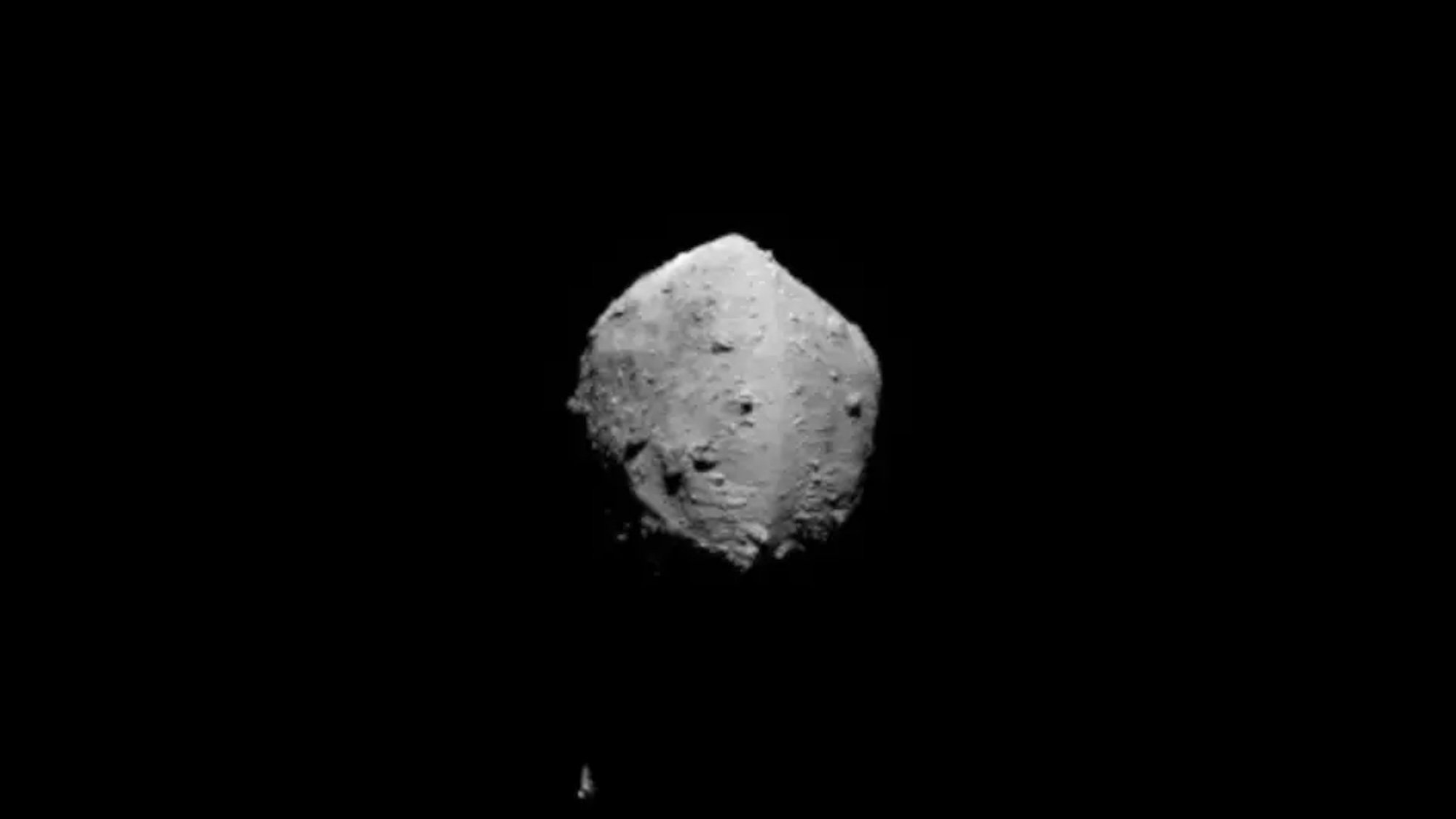
Hera spacecraft photographs asteroid from 37 miles away

The ESA’s spacecraft is en route to study the aftermath of DART's collision with Diphamos in 2022.

Lean: Center Fact-focusedFactuality: Mostly factualCountry: United StatesFunding: CorporateOwner: Independent
Full coverage
Coverage breakdown
Funding
Corporate100%
Countries
United States100%
Media ownership
Independent100%
Avg reliability65
Low-credibility share0%
Fact / opinion1/0
State media0%
More analysis
Truth score: 38 (Weakly supported) Propaganda risk: 0 Trending: Low Sources: 1 Reliability: 65 Bias severity: 0 Risk: 0Sentiment: 0Sensationalism: 0 Amplification: 0
How we score

Like
Culture
1 source

Who is covering this

QuartzLeans left
Truth score 40
Left 100%100%
QuartzLeans left

The largest asteroid impact craters on Earth, ranked by size

Vredefort, Chicxulub, and Sudbury Basin mark ancient strikes tied to global fires, years of blocked sunlight, and today's nickel and iron mines.

Lean: Leans left Fact-focusedFactuality: HighCountry: United StatesFunding: CorporateOwner: G/O Media
Full coverage
Coverage breakdown
Funding
Corporate100%
Countries
United States100%
Media ownership
G/O Media100%
Avg reliability72
Low-credibility share0%
Fact / opinion1/0
State media0%
More analysis
Truth score: 40 (Limited corroboration) Propaganda risk: 0 Trending: Low Sources: 1 Reliability: 72 Bias severity: 0 Risk: 0Sentiment: -100Sensationalism: 0 Amplification: 0

How we score

Like
Business
2 sources

Who is covering this

NewsCenterPhysCenter
Truth score 48
Centre 100%100%
PhysCenter

Simulations cast doubt on unusual asteroid's 'dark comet' status

In 2031, Japan's Hayabusa2 spacecraft will arrive at the near-Earth asteroid 1998 KY26: a tiny body that is accelerating in a way that astronomers have struggled to explain. Some studies have suggested that the asteroid is pushed along...

Lean: Center Fact-focusedFactuality: Mostly factualCountry: United StatesFunding: CorporateOwner: Independent
Full coverage
Coverage breakdown
Funding
Corporate100%
Countries
India50%
United States50%
Media ownership
Independent100%
Avg reliability65
Low-credibility share0%
Fact / opinion2/0
State media0%
More analysis
Truth score: 48 (Limited corroboration) Propaganda risk: 0 Trending: Low Sources: 2 Reliability: 65 Bias severity: 0 Risk: 0Sentiment: 0Sensationalism: 4 Amplification: 0

How we score

Like
Left 33%33%Centre 67%67%
ABC News (US)Leans left

Europe's Hera spacecraft begins close inspections of asteroid rammed by NASA

A European spacecraft has begun close inspections of a harmless asteroid rammed by NASA four years ago in a planetary defense test. A European spacecraft has begun close inspections of an asteroid rammed by NASA four years ago in a...

Lean: Leans left Fact-focusedFactuality: HighCountry: United StatesFunding: CorporateOwner: Walt Disney Company
Full coverage
Coverage breakdown
Funding
Corporate100%
Countries
United States100%
Media ownership
Independent67%
Walt Disney Company33%
Avg reliability70
Low-credibility share0%
Fact / opinion3/0
State media0%
More analysis
Truth score: 60 (Corroborated) Propaganda risk: 0 Trending: Low Sources: 3 Reliability: 70 Bias severity: 0 Risk: 0Sentiment: 0Sensationalism: 0 Amplification: 0

How we score

Like
Business
1 source

Who is covering this

NewsCenter
Truth score 38
Centre 100%100%
NewsCenter

Scientists find rare rock formed by carbon-rich asteroid impact in Moon dust that may explain how water r

Scientists find rare rock formed by carbon-rich asteroid impact in Moon dust that may explain how water r The Times of India

Lean: Center Fact-focusedFactuality: Mostly factualCountry: IndiaFunding: CorporateOwner: Independent
Full coverage
Coverage breakdown
Funding
Corporate100%
Countries
India100%
Media ownership
Independent100%
Avg reliability65
Low-credibility share0%
Fact / opinion1/0
State media0%
More analysis
Truth score: 38 (Weakly supported) Propaganda risk: 0 Trending: Low Sources: 1 Reliability: 65 Bias severity: 0 Risk: 0Sentiment: 0Sensationalism: 0 Amplification: 0
How we score

Like
Science
1 source

Who is covering this

PhysCenter
Truth score 38
Centre 100%100%
PhysCenter

Overlooked material in Ryugu and meteorites may explain how water spared ancient chemistry

Asteroid Ryugu and some carbonaceous meteorites, which are thought to have similar origins in the early solar system, are known as chemically "primitive" materials because they preserve the chemical composition of the early solar system...

Lean: Center Fact-focusedFactuality: Mostly factualCountry: United StatesFunding: CorporateOwner: Independent
Full coverage
Coverage breakdown
Funding
Corporate100%
Countries
United States100%
Media ownership
Independent100%
Avg reliability65
Low-credibility share0%
Fact / opinion1/0
State media0%
More analysis
Truth score: 38 (Weakly supported) Propaganda risk: 0 Trending: Low Sources: 1 Reliability: 65 Bias severity: 0 Risk: 0Sentiment: 0Sensationalism: 0 Amplification: 0

How we score

Like
Business
1 source

Who is covering this

NewsCenter
Truth score 38
Centre 100%100%
NewsCenter

NASA’s Lucy travels more than 2.2 billion miles in 5 years, becoming the first spacecraft to reach Jupite

NASA’s Lucy travels more than 2.2 billion miles in 5 years, becoming the first spacecraft to reach Jupite The Times of India NASA’s Lucy Reaches Trojan Asteroid Region 5 Years After Launch NASA Science (.gov) NASA said on October 28,...

Lean: Center Fact-focusedFactuality: Mostly factualCountry: IndiaFunding: CorporateOwner: Independent
Full coverage
Coverage breakdown
Funding
Corporate100%
Countries
India100%
Media ownership
Independent100%
Avg reliability65
Low-credibility share0%
Fact / opinion1/0
State media0%
More analysis
Truth score: 38 (Weakly supported) Propaganda risk: 0 Trending: Low Sources: 1 Reliability: 65 Bias severity: 0 Risk: 0Sentiment: 0Sensationalism: 0 Amplification: 0

How we score

Like
Science
1 source

Who is covering this

PhysCenter
Truth score 38
Centre 100%100%
PhysCenter

Asteroids venturing near white dwarfs don't break directly into dust, study reveals

When asteroids travel too close to white dwarfs, the dense remnants of stars that have exhausted their nuclear fuel, powerful gravitational forces can tear them apart. However, new research from Planetary Science Institute (PSI)...

Lean: Center Fact-focusedFactuality: Mostly factualCountry: United StatesFunding: CorporateOwner: Independent
Full coverage
Coverage breakdown
Funding
Corporate100%
Countries
United States100%
Media ownership
Independent100%
Avg reliability65
Low-credibility share0%
Fact / opinion1/0
State media0%
More analysis
Truth score: 38 (Weakly supported) Propaganda risk: 0 Trending: Low Sources: 1 Reliability: 65 Bias severity: 0 Risk: 0Sentiment: 0Sensationalism: 0 Amplification: 0

How we score

Like
Science
1 source

Who is covering this

PhysCenter
Truth score 38
Centre 100%100%
PhysCenter

Queen's University Belfast students find Neptune's elusive Trojan asteroids

An international team led by researchers at Queen's University Belfast has made a discovery that has eluded astronomers for decades. Beginning in 1906, telescope observations revealed a population of asteroids leading and trailing...

Lean: Center Fact-focusedFactuality: Mostly factualCountry: United StatesFunding: CorporateOwner: Independent
Full coverage
Coverage breakdown
Funding
Corporate100%
Countries
United States100%
Media ownership
Independent100%
Avg reliability65
Low-credibility share0%
Fact / opinion1/0
State media0%
More analysis
Truth score: 38 (Weakly supported) Propaganda risk: 0 Trending: Low Sources: 1 Reliability: 65 Bias severity: 0 Risk: 0Sentiment: 0Sensationalism: 0 Amplification: 0

How we score

Like